


Structural steel grade determines the strength, toughness, and service life of engineering projects. Different grades are suitable for buildings, machinery, offshore, and high‑temperature environments. This article sorts out mainstream steel grades, their performance characteristics, and application scenarios to help buyers quickly determine the most appropriate material.
Structural steel is the backbone of modern engineering and construction, used in everything from high-rise buildings and bridges to machinery and infrastructure. The grade of structural steel directly impacts its performance, including strength, toughness, corrosion resistance, and machinability. Choosing the right steel grade is crucial for ensuring structural safety, reducing costs, and extending the service life of your project. With so many different steel grades available, it can be challenging to know which one is right for your application. This guide breaks down the most common structural steel grades, their properties, and their ideal uses to help you make an informed decision.
Key Factors to Consider When Choosing a Structural Steel Grade
Before diving into specific steel grades, it’s important to understand the key factors that influence your choice. These factors will help you narrow down the options and select the grade that best meets your project’s needs:
1. Load Requirements: The amount of weight the steel will need to support (static load, dynamic load, or impact load) is the most important factor. Higher load requirements require steel grades with higher yield strength and tensile strength.
2. Environmental Conditions: The environment in which the steel will be used (e.g., marine, industrial, residential, high-temperature) affects the required corrosion resistance and heat resistance of the steel.
3. Machinability and Fabrication: If the steel needs to be cut, drilled, welded, or bent, you’ll need a grade that is easy to fabricate without compromising its strength.
4. Compliance with Standards: Depending on your project’s location, you may need to comply with local or international standards (e.g., GB, ASTM, EN, JIS).
5. Budget: Different steel grades vary in cost, so you’ll need to balance performance requirements with your budget.
Mainstream Structural Steel Grades and Their Properties
Below are the most common structural steel grades used in global engineering projects, along with their properties, standards, and application scenarios.
1. Q235 Steel (GB Standard)
Q235 is a common carbon structural steel grade in China, defined by the GB/T 700 standard. It is one of the most widely used steel grades due to its cost-effectiveness and versatility.
Key Properties:
- Yield Strength: ≥235MPa
- Tensile Strength: 375-500MPa
- Elongation: ≥26%
- Toughness: Good at room temperature, but not suitable for low-temperature environments (below -20°C)
- Machinability: Excellent, easy to cut, drill, and weld
- Corrosion Resistance: Basic, requires surface treatment (e.g., galvanization, painting) for harsh environments
Application Scenarios:
- General civil engineering projects: Small-scale buildings, sheds, garages, and temporary structures.
- Light to medium load-bearing components: Angle steel, channel steel, and small beams.
- Non-critical machinery parts: Brackets, supports, and frames.
- Budget-conscious projects where high strength is not required.
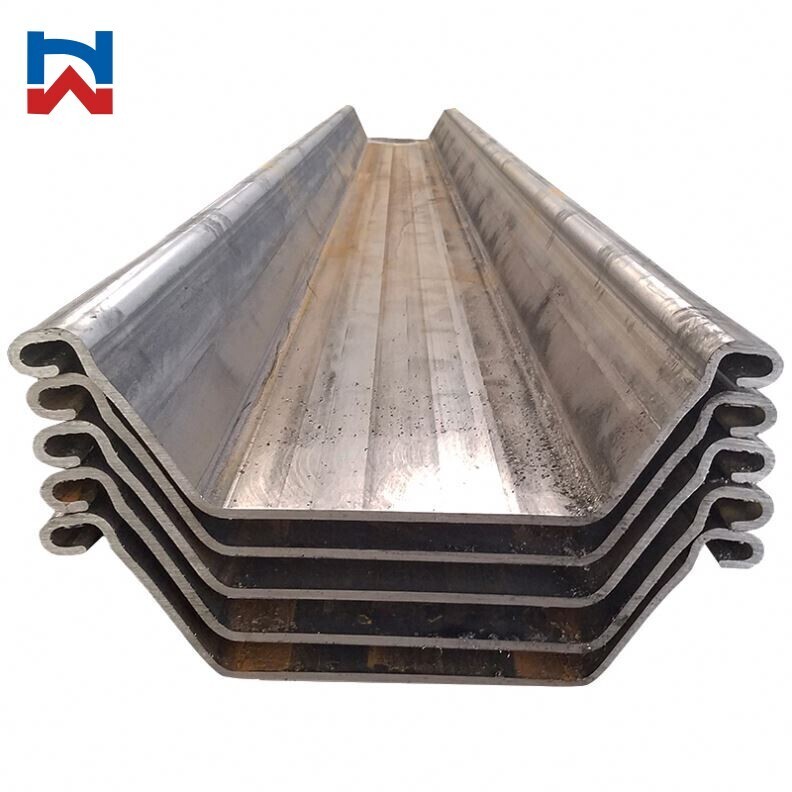
Recommended Haiwo product: Q235 u type steel sheet piles
2. Q355 Steel (GB Standard)
Q355 is a high-strength carbon structural steel grade in China, replacing the old Q345 grade. It is widely used in large-scale engineering projects due to its superior strength and toughness.
Key Properties:
- Yield Strength: ≥355MPa
- Tensile Strength: 470-630MPa
- Elongation: ≥21%
- Toughness: Good at low temperatures (down to -40°C for some sub-grades), making it suitable for cold regions.
- Machinability: Good, but requires slightly more care during welding than Q235.
- Corrosion Resistance: Basic, but better than Q235; surface treatment is recommended for harsh environments.
Application Scenarios:
- Large-scale civil engineering: High-rise buildings, bridges, highways, and port facilities.
- Heavy load-bearing components: H beam, universal beam, steel sheet pile, and large columns.
- Low-temperature environments: Projects in cold regions (e.g., northern China, Canada, Europe).
- Industrial projects: Industrial workshops, warehouses, and power plants.
3. A36 Steel (ASTM Standard)
A36 is a common carbon structural steel grade in North America, defined by the ASTM A36 standard. It is the most widely used steel grade in the US construction industry.
Key Properties:
- Yield Strength: ≥250MPa (36 ksi)
- Tensile Strength: 400-550MPa (58-79 ksi)
- Elongation: ≥20%
- Toughness: Good at room temperature, suitable for most ambient conditions.
- Machinability: Excellent, easy to fabricate and weld.
- Corrosion Resistance: Basic, requires surface treatment for marine or industrial environments.
Application Scenarios:
- North American construction projects: Buildings, bridges, highways, and infrastructure.
- General structural components: Beams, columns, angle steel, and channel steel.
- Machinery and equipment: Frames, brackets, and supports.
- Projects requiring compliance with ASTM standards.
4. SS400 Steel (JIS Standard)
SS400 is a carbon structural steel grade in Japan, defined by the JIS G 3101 standard. It is widely used in Japanese and Southeast Asian projects.
Key Properties:
- Yield Strength: ≥245MPa
- Tensile Strength: 400-510MPa
- Elongation: ≥21%
- Toughness: Good at room temperature, suitable for moderate environments.
- Machinability: Excellent, easy to cut, drill, and weld.
- Corrosion Resistance: Basic, requires surface treatment for harsh environments.
Application Scenarios:
- Southeast Asian and Japanese projects: Buildings, bridges, and industrial facilities.
- Light to medium load-bearing components: Beams, columns, and sheet metal.
- Machinery manufacturing: Frames and supports for small to medium machinery.
5. S235/S355 Steel (EN Standard)
S235 and S355 are European structural steel grades, defined by the EN 10025 standard. They are widely used in EU projects and other regions that follow European standards.
Key Properties (S235):
- Yield Strength: ≥235MPa
- Tensile Strength: 360-510MPa
- Elongation: ≥26%
- Toughness: Good at room temperature.
- Machinability: Excellent.
Key Properties (S355):
- Yield Strength: ≥355MPa
- Tensile Strength: 470-630MPa
- Elongation: ≥21%
- Toughness: Good at low temperatures (down to -20°C for S355JR, -40°C for S355J2).
- Machinability: Good.
Application Scenarios:
- EU projects: High-rise buildings, bridges, and infrastructure.
- S235: Small to medium projects, light load-bearing components.
- S355: Large-scale projects, heavy load-bearing components, low-temperature environments.
Special Steel Grades for Specific Environments
In addition to the mainstream grades above, there are special steel grades designed for specific harsh environments:
1. Corrosion-Resistant Steel: Grades such as A242 (ASTM) and S355J0W (EN) are designed for marine and industrial environments, offering superior corrosion resistance without additional surface treatment. They are commonly used in coastal projects, chemical plants, and offshore structures.
2. High-Temperature Steel: Grades such as A387 (ASTM) and 15CrMo (GB) are designed for high-temperature environments (above 300°C), such as power plants and industrial furnaces. They offer excellent heat resistance and creep strength.
3. Low-Temperature Steel: Grades such as A514 (ASTM) and Q355GNH (GB) are designed for low-temperature environments (below -40°C), such as projects in Arctic regions. They offer excellent toughness and resistance to brittle fracture.
Step-by-Step Guide to Choosing the Right Steel Grade
Follow these steps to select the right structural steel grade for your project:
1. Determine Your Load Requirements: Calculate the maximum load the steel will need to support, including static loads (e.g., building weight) and dynamic loads (e.g., wind, traffic). This will help you determine the required yield strength and tensile strength.
2. Assess the Environmental Conditions: Consider the temperature, humidity, and exposure to corrosive substances (e.g., saltwater, chemicals). This will help you determine if you need a corrosion-resistant, high-temperature, or low-temperature steel grade.
3. Check Compliance Requirements: Determine if your project needs to comply with local or international standards (e.g., GB, ASTM, EN). This will narrow down the available grades.
4. Evaluate Fabrication Needs: Consider how the steel will be processed (cutting, drilling, welding, bending). Choose a grade that is easy to fabricate without compromising its strength.
5. Balance Performance and Budget: Compare the properties and costs of different grades to find the one that meets your performance requirements while staying within budget. Remember that higher-grade steel may have a higher initial cost but can reduce maintenance costs and extend the project’s service life.
HW Steel’s Structural Steel Grade Solutions
HW Steel Group offers a comprehensive range of structural steel grades, including Q235, Q355, A36, SS400, S235, S355, and special grades for harsh environments. Our products meet international standards, ensuring high quality and reliability.
We provide bulk wholesale options for all steel grades, helping clients reduce procurement costs. Our team of experts can help you select the right grade for your project, based on your load requirements, environmental conditions, compliance needs, and budget. We also offer customization services, including custom sizes, thicknesses, and surface treatments, to meet the unique needs of each project.
In addition, HW Steel offers global delivery and professional technical support, ensuring that your project is completed on time and within budget. Whether you need a cost-effective grade for a small project or a high-strength grade for a large infrastructure project, we have the products and expertise to help you succeed.
Conclusion
Choosing the right structural steel grade is a critical step in ensuring the success of your engineering project. By understanding the key factors that influence your choice and the properties of different steel grades, you can select the grade that best meets your project’s needs. Whether you’re working on a small residential project or a large-scale infrastructure project, HW Steel Group is here to provide you with high-quality steel and professional guidance.
Contact us today to request a free quote, download our product catalog, or get expert advice on selecting the right structural steel grade for your project.
Latest News
- 304 vs 316 Stainless Steel: Full Buyer Guide for Industrial Sourcing
- Bulk Steel Supply for Southeast Asian Infrastructure Projects
- Steel Sheet Pile Installation Best Practices
- Bulk Wholesale of Steel Profiles: What HW Steel Provides
- How to Choose the Right Structural Steel Grade
- H Beam vs. Universal Beam (I‑Beam): Key Differences & Selection Tips
Send Us A Message